 Skip to content

Nasal strips may help some people with hay fever breathe more comfortably through their nose by supporting the sides of the nose. They do not treat the allergic reaction, reduce allergic inflammation or filter pollen. Their potential role is extra airflow support alongside appropriate hay fever treatment.
When pollen leaves your nose feeling blocked, a non-medicated option can sound appealing. Before trying nasal strips for hay fever, it helps to understand what a strip can actually do—and where its benefits stop. Here is how they could fit into your routine, with a clear look at the research.
Why does hay fever cause a blocked nose?
Hay fever, also written as hayfever, is allergic rhinitis triggered by pollen. The allergic reaction inflames the lining of the nose, which can cause swelling and congestion alongside sneezing, itching and a runny nose. Itchy, watery eyes can be part of the picture too.
Allergic rhinitis can also be triggered by dust mites, animal allergens and mould. If your symptoms continue outside pollen season, it is worth finding out what is causing them rather than assuming pollen is responsible. The Allergy Foundation of South Africa explains allergic rhinitis and its treatment.
How can nasal strips assist with hay fever?
An external nasal strip sticks across the outside of the nose. Its spring-like action gently supports the sides of the nose around the nasal valve, a narrow part of the nasal airway near the nostrils. This can create more room for air to pass through.
That mechanical action is different from treating swollen nasal tissue. A strip may improve airflow without removing the underlying reason for the congestion. How much difference you notice will depend on what is restricting your nasal breathing.
A clinical study of people with different causes of nasal obstruction illustrates this distinction: airflow measurements improved with an external dilator, but participants with mucosal swelling did not report a statistically significant improvement in how open their nose felt.
| What you want help with | What a nasal strip can offer |
|---|---|
| Air passing through the front of the nose | Mechanical support that may make nasal breathing feel easier |
| Allergy-related swelling and inflammation | It does not treat the allergic inflammation |
| Sneezing, itching or watery eyes | It is not a treatment for these allergy symptoms |
| Pollen exposure | It does not act as a pollen filter or barrier |
What does the research say?
A 2017 trial involving 65 male adolescent athletes, including 30 with persistent allergic rhinitis, found that an external nasal dilator improved measured nasal airflow and reduced nasal resistance compared with a placebo during exercise testing. This supports a possible airflow benefit, but it was a small study in a specific population. It does not establish that strips relieve all hay fever symptoms in adults.
Evidence about sleep is mixed. A 2018 exploratory trial with 59 participants found improvements in some self-reported sleep outcomes with active strips compared with placebo, particularly at seven days. However, two trials published in 2019, involving 270 participants in total, did not find a significant benefit over placebo for the main sleep outcomes or overall subjective congestion measures.
The sleep trials involved people with chronic night-time congestion, not exclusively people with pollen allergies. The studies cited here tested other nasal dilators, not Ezebreathe. They support realistic expectations about mechanical airflow assistance, not a promise of allergy relief or better sleep with our product.
A practical hay fever routine—with nasal strips as an optional extra
1. Address the allergy itself
Ask a pharmacist or doctor which treatment suits your symptoms. Options can include antihistamines, steroid nasal sprays and saline products. Keep using prescribed treatment as directed; a strip should not replace it. The NHS guide to allergic rhinitis explains the main options.
2. Check your local pollen report
South Africa has different climates and pollen patterns, so a single national “hay fever season” is not a useful guide for everyone. Check the latest report for a monitoring location near you through The Real Pollen Count, the South African pollen monitoring network.
3. Reduce the pollen you bring indoors
On high-pollen days, shower and change clothes after being outdoors. Keep windows closed where practical and avoid drying washing outside when pollen counts are high. These steps address pollen exposure, which a nasal strip cannot do. See the NHS hay fever guidance for more practical measures.
4. Apply your strip to clean, dry skin
If you want to try extra airflow support, follow the instructions on your Ezebreathe packaging. Apply to clean, dry, unbroken skin, position as shown and press firmly. Remove slowly after use, use a fresh strip each time and stop if irritation occurs. If frequent nose wiping has left your skin sore or broken, do not apply a strip to that area.
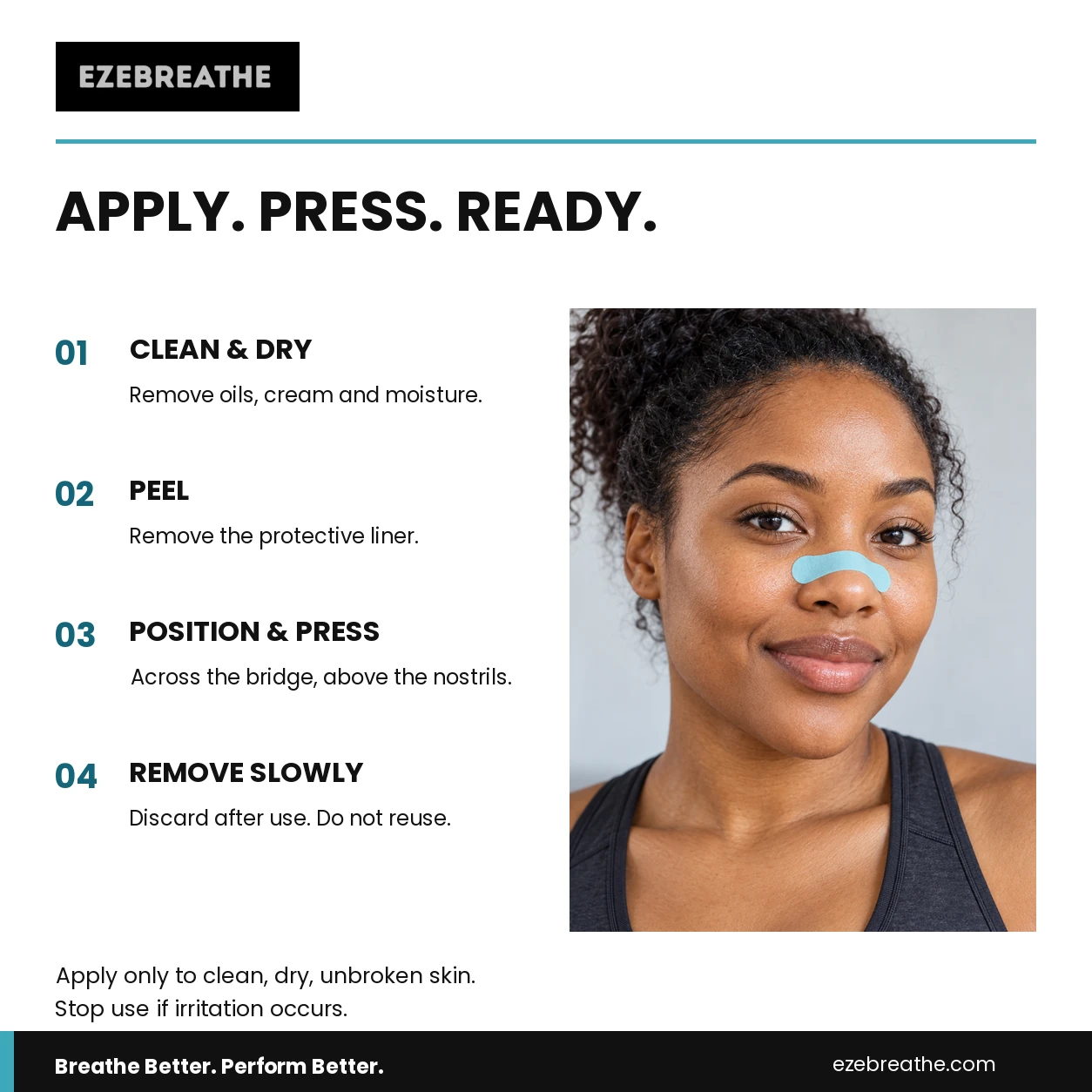
Correct placement matters. Follow your pack instructions or see our nasal strip placement guide.
Where does Ezebreathe fit in?
Ezebreathe offers non-medicated, single-use nasal strips designed to support nasal airflow mechanically. Our regular range includes black, blue and pink options, with 50 strips per pack.
If you are looking for a simple addition to your routine, explore Ezebreathe nasal strips. Choose them for potential nasal breathing comfort while continuing to address the allergy itself. They are not an allergy medicine, and individual results can vary.
Frequently asked questions
Do nasal strips cure hay fever?
No. They support the nose mechanically and do not treat the allergic reaction. Hay fever management may involve reducing pollen exposure and using suitable medicines with advice from a pharmacist or doctor.
Do nasal strips stop pollen entering your nose?
No. An external strip sits on the skin and does not filter the air entering your nostrils.
Can nasal strips help a blocked nose at night during hay fever season?
They may make nasal breathing feel easier for some people, but they do not treat allergy-related swelling. Better sleep is not guaranteed: controlled studies have produced mixed results.
Are Ezebreathe nasal strips reusable?
No. Each strip is for one use. Remove it slowly after use and apply a fresh strip when needed, following the pack instructions.
When should you get medical advice?
Speak to a pharmacist or doctor if symptoms keep disrupting your sleep or daily life, worsen, or do not improve with treatment. Seek advice if you are unsure what is causing the blockage, or if your asthma is getting worse. These are reasons to review your allergy care rather than relying on an airflow aid alone. See the NHS advice on when to seek help.
Sources checked: 21 October 2026. This article provides general information and does not replace individual medical advice.